
Privileged Access Management Services
PAM Services Built for the Accounts Attackers Want Most
Most breaches don’t start with a phishing email landing in a regular employee’s inbox. They start with a compromised admin account, a forgotten service account with standing privileges or a third-party vendor whose access was never revoked. That’s the privileged access problem and it’s the one our PAM services are built to solve.
We work with enterprise security and IT teams to discover, control, and monitor every privileged account across on-prem, cloud, and hybrid environments. Not just to check a compliance box, but to genuinely reduce the risk of an attacker getting in and staying in.
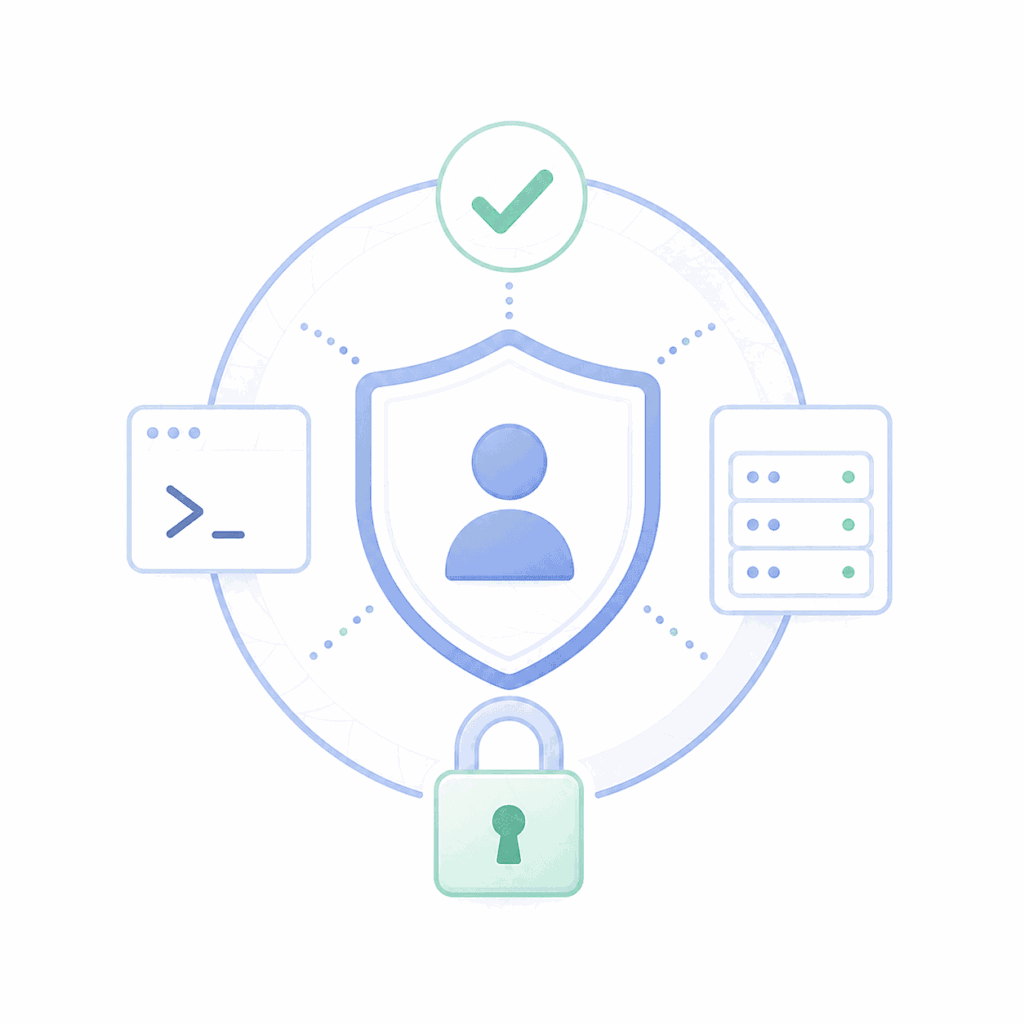
What is Privileged Access Management and why do most organisations get it wrong?
Privileged Access Management (PAM) is the practice of securing, controlling, and auditing accounts that hold elevated permissions the ones that can read sensitive databases, modify system configurations, deploy software, or reset other users’ credentials. Administrator accounts, root accounts, service accounts, cloud IAM roles, and DevOps pipeline credentials all fall into this category.
The reason most organisations struggle with PAM isn’t that they don’t know the accounts exist. It’s that privileged access tends to grow quietly over time. An admin account gets created for a project, the project ends, and the account stays. A service account password gets hard-coded into a script. A third-party consultant gets elevated access for an integration and that access never gets reviewed. Before long, you have dozens of high-risk credentials scattered across your environment with no clear accountability, no rotation schedule, and no monitoring.
That’s what attackers look for. Privileged credentials are the skeleton key to your environment once a threat actor gets hold of one, lateral movement and data exfiltration become straightforward. Our PAM services exist to close that window before it gets exploited.
How Our PAM Services Reduce Privileged Access Risk
Our PAM services reduce privileged access risk by enforcing least-privilege access, securing credentials, and continuously monitoring privileged activity. By controlling how privileged access is granted, used, and reviewed, organizations can significantly lower the risk of breaches caused by compromised accounts.
PAM for cloud and hybrid environments
The privileged access problem is more complex in cloud environments than it was on-prem. Cloud platforms create privileged access through IAM roles, service principals and API keys that behave nothing like traditional admin accounts but carry the same level of risk. In a multi-cloud or hybrid environment, the attack surface is fragmented across AWS, Azure, GCP and your on-prem infrastructure often with no unified view.
Our PAM services extend to cloud environments, covering cloud root accounts, privileged IAM roles, cross-account access and secrets stored in cloud-native vaults. We bring the same principles least privilege, just-in-time access, session visibility and zero standing privileges into your cloud and hybrid environment without forcing a tool that wasn’t designed for it.
What Our PAM Services Deliver
Our PAM services manage the full privileged access lifecycle from the first discovery scan to ongoing monitoring and optimisation. Here’s what we deliver
Privileged account discovery and onboarding
Before you can protect privileged accounts, you need to know they exist. We scan your environment to identify and classify every administrator account, service account, application credential, and shared account including the ones that have been sitting unmanaged for years.
Credential vaulting and password management
We store privileged credentials in encrypted, access-controlled vaults and eliminate hard-coded passwords from scripts, config files, and legacy systems. Passwords are rotated automatically, and no human ever needs to know the actual value of a service account credential.
Just-In-Time (JIT) Access
Standing privileges are one of the biggest risks in enterprise environments. With JIT access controls, privileged permissions are granted only when needed and only for the time required then automatically revoked. There's no persistent admin access sitting open for an attacker to reuse.
Least privilege enforcement
We review existing permission models and reduce excessive access to the minimum required for each role and task. This limits blast radius if any account is ever compromised and is a key requirement under frameworks like ISO 27001 and NIST.
Session monitoring and recording
Every privileged session is monitored in real time and recorded for audit purposes. If something goes wrong whether it's an insider threat or a compromised account you have a complete record of what was done, when, and by whom.
Audit trails and threat visibility
We configure detailed logging and reporting across your privileged access environment. This gives your security team visibility into suspicious behaviour and gives your compliance team the evidence they need for SOX, PCI-DSS, HIPAA, and ISO 27001 audits.
Privileged Access Should Be Controlled Not Trusted
If privileged credentials are shared, permanent, or unmonitored, your organization is exposed.
Speak with our PAM specialists to assess privileged access risk and implement controls that protect what matters most.
Why PAM Requires A Specialist Approach
Buying a PAM platform and deploying it are two very different things. Most PAM implementations that fail don’t fail because the tool was wrong they fail because the deployment wasn’t scoped properly, the integrations were incomplete or the operational processes around the tool were never defined.
Privileged access management requires specialist knowledge of how attackers think, how enterprise IT environments actually work, and how to design controls that security teams will use and IT teams won’t route around. We’ve seen the shortcuts that get taken when PAM is treated as a checkbox and we build specifically to prevent them.
We work alongside your security, IT,and compliance teams to align PAM controls with operational workflows so the solution works for people under pressure at 2am, not just for auditors during a review.
A dedicated pam service is required to manage high-risk access paths that attackers actively target. Our pam service is built to handle operational complexity, integrate with enterprise systems and scale across modern IT environments without disrupting business operations.
We work closely with security, IT and compliance teams to ensure privileged access controls align with operational workflows and regulatory requirements.
We focus on:
- High-risk access paths attackers target first.
- Operational environments where availability matters.
- PAM designs that work for both security and IT teams.
- Controls that scale across cloud, on-prem and hybrid systems.
Our PAM implementations balance security, usability and operational stability.

How we implement PAM our four-phase approach
Phase 1
Phase 2
Phase 3
Phase 4
Discovery and risk assessment
We map your privileged access environment, identify unmanaged accounts, and prioritise the highest-risk access paths.
Design
and architecture
We define the PAM architecture that fits your environment, compliance requirements, and existing tools with no vendor lock-in.
Deployment
and integration
We deploy and configure the PAM platform, integrate with your directory services, ticketing systems, and SIEM, and establish the operational runbooks your team needs.
Ongoing monitoring
and optimisation
We don't hand over and disappear. We provide ongoing support to refine access policies, review privilege creep, and keep your PAM controls effective as your environment evolves.
PAM Platforms We Support
We deliver PAM services across leading platforms and remain tool-agnostic the right platform is the one that fits your risk profile, technology stack, and operational requirements, not the one that’s easiest for us to deploy.


Frequently Asked Questions (FAQs)
What is a PAM service and why do enterprises need it?
A PAM service secures high-risk privileged accounts and enforces controls over administrator, service and application access. Enterprises need it to prevent credential misuse, reduce breach risk and control the most powerful access paths.
How does a PAM service help prevent ransomware and lateral movement?
A PAM service limits standing privileges, enforces just-in-time access, and monitors privileged sessions. This prevents attackers from moving laterally and using stolen credentials to deploy ransomware or escalate access.
What types of privileged accounts should be protected by a PAM service?
A PAM service should protect administrator accounts, service accounts, application credentials, cloud root accounts, DevOps pipelines, and third-party privileged access.
How is PAM service different from standard IAM?
IAM manages general user access, while a PAM service secures high-risk privileged access. PAM adds stronger controls such as credential vaulting, session recording, and time-bound access that standard IAM does not provide.
What are the business benefits of using a managed PAM service?
A managed PAM service reduces breach risk, improves audit readiness, lowers operational burden, and ensures privileged access controls remain effective as environments change.